

To lock an Android device to one app, use App Pinning for temporary use, Android Lock Task Mode for developer-controlled deployments, or an MDM solution for business fleets. For enterprise use, MDM-based Single App Kiosk Mode is usually the best option because IT teams can remotely enroll devices, assign one approved app, block settings and navigation, push updates, and monitor devices from a central dashboard.
When employees or customers have unrestricted access to a device, distractions and risks quickly creep in. Non-work apps, accidental setting changes, or even security issues can all reduce its value. Locking devices into Single App Mode solves this by keeping them focused on one task and blocking everything else.
Often called Single App Kiosk Mode, this setup is widely used in businesses to ensure devices serve a specific purpose, whether it is delivery drivers relying on navigation apps, customers using self-service kiosks, or students learning on tablets.
In this blog, we will cover what single app mode is and how to lock Android devices into single app mode.
Key Takeaways
Single App Kiosk Mode transforms Android devices into secure, task-focused endpoints by restricting access to one application and simplifying device management.
- Understand Single App Kiosk Mode: Locking an Android device to a single application prevents users from accessing settings, other apps, and system functions, creating a dedicated-purpose device.
- Know When to Use It: Single App Mode is ideal for self-service kiosks, POS systems, digital signage, visitor check-ins, warehouse scanners, and other business scenarios requiring focused device usage.
- Compare Setup Options: Android devices can be locked using App Pinning, Android Lock Task APIs, or an MDM platform, with each approach offering different levels of security, scalability, and administrative control.
- Prioritize Centralized Management: For organizations managing multiple devices, remote policy enforcement, automated provisioning, application updates, and compliance monitoring significantly reduce IT overhead.
- Build for Long-Term Reliability: A well-configured kiosk deployment improves security, minimizes device misuse, delivers a consistent user experience, and keeps Android endpoints operating as intended across every location.
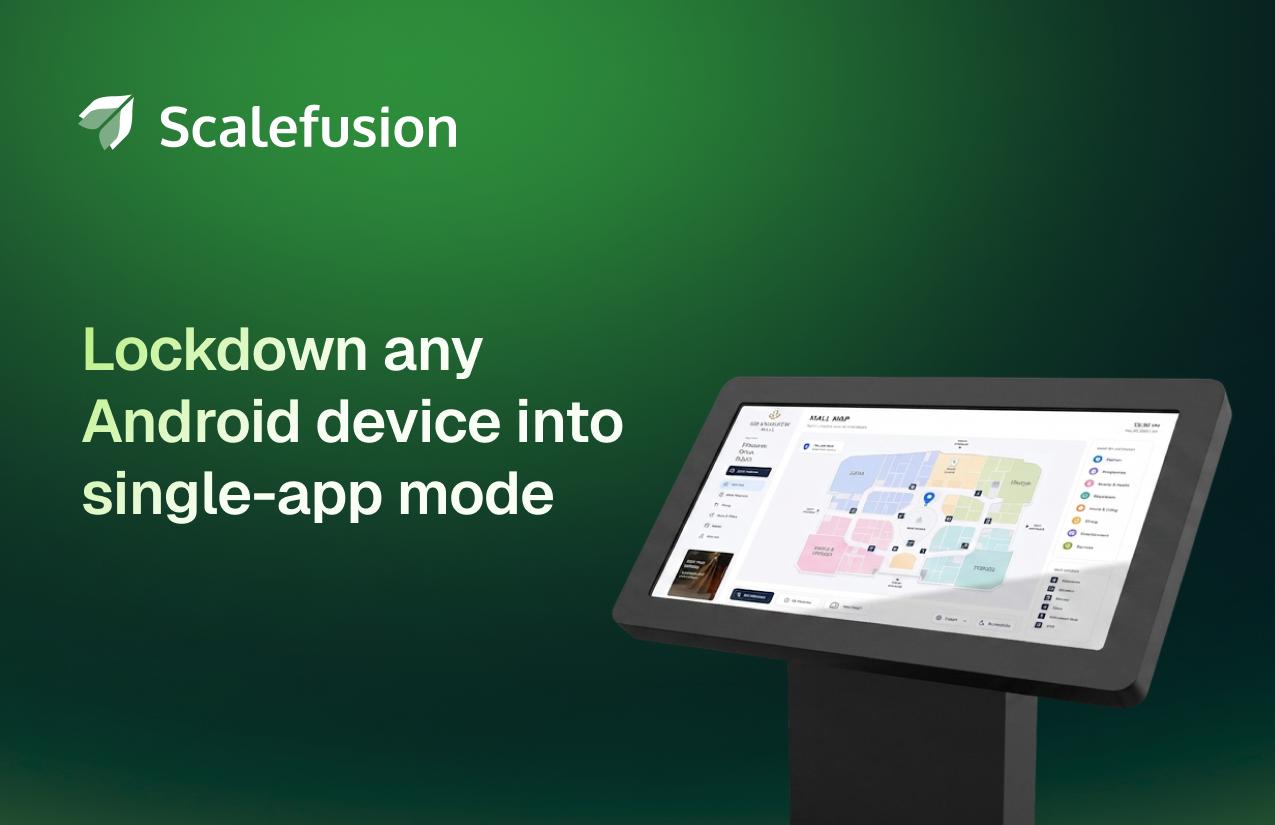
What is Android Single App Kiosk Mode?
Android single app kiosk mode is a device lockdown feature that restricts an Android device to run only one specific app. Once configured correctly, single app kiosk mode can restrict users from exiting the app, accessing device settings, or switching to other apps, helping create a controlled environment for dedicated business use.
Single app kiosk mode is especially useful for businesses that rely on Android devices for specific tasks, such as self-service kiosks, point-of-sale systems, learning tablets, or digital catalogs. By enabling kiosk mode on Android, organizations can ensure devices remain secure, distraction-free, and dedicated to their intended purpose.
How Does Android Single App Kiosk Mode Work?
Android single app mode works by modifying system-level behaviors to restrict the device’s operation to a single, predefined app. When this mode is activated, the Android OS suppresses user access to system UI elements such as the home button, app switcher, notification bar, and settings menu.
At the backend, the system launches the selected app automatically, either during device boot or after a timeout and overrides user input that would normally exit the app. Even if the device is restarted, it relaunches directly into the same app, maintaining its locked-down state.
To enforce single app mode on Android, IT admins typically configure a set of policies that:
- Block background processes or unauthorized apps from launching
- Disable hardware buttons like volume, back, or power (supported devices only)
- Prevent access to connectivity options like Wi-Fi, Bluetooth, or USB
- Hide or disable the status bar, keyboard, and gesture navigation
This ensures that the device remains locked into the intended app without manual intervention or the risk of tampering.
The logic behind single app mode in Android is to create a controlled environment that supports a very specific business use, whether it is scanning inventory, displaying product catalogs, or collecting visitor data. It converts the device into a single-purpose terminal while maintaining system stability and enforcing security policies in the background.
Ways to Enable Single App Kiosk Mode on Android?
There are a few different ways to enable single app mode on Android devices, depending on the use case, level of control needed, and technical expertise required. Here are three common methods to consider:
1. App or Screen Pinning
Android’s built-in App Pinning feature allows users to lock the device into a single app without installing any third-party software.
- Open the Settings app on your Android device
- Navigate to Security or Security & Privacy
- Toggle on App Pinning or Screen Pinning
- Ensure Screen Pinning is enabled in Settings
- Turn on Ask for PIN/pattern before unpinning
- Open the app you wish to pin and tap the app icon
- From the drop-down menu, select Pin or Pin this app
Note: The path may vary depending on the Android version and manufacturer. Alternatively, you can search for App Pinning through the search bar in the Settings tab.
Limitations:
- Users can easily exit App Pinning
- Doesn’t block system settings
- Not suitable for business or unattended devices
2. Android APIs (Lock Task Mode)
This method uses native Android framework APIs. It requires setting your app as the device owner or device policy controller to lock the screen seamlessly without user prompts.
- Create the device admin receiver
- Configure the Android app manifest
- Create the XML policies file
- Add the whitelisting and locking code
- Factory reset and provision via Android Debug Bridge
- Launch the app to lock the device into it automatically
- System buttons and navigation will disappear or lock out
Limitations:
- No support to remotely enable or disable kiosk mode
- Focus on app locking and no advanced restrictions
- No time, location, or business hour-based kiosk mode
3. Custom ROM modification (AOSP)
This method requires downloading, editing, and compiling the Android OS from source code.
- Initialize the Android build environment
- Remove the default system launcher
- Integrate your app as the core system launcher
- Strip navigation and status bars from System UI
- Build the OS binaries from your workspace shell
- Once the compilation is complete, flash the system
- Single-app behavior is hardcoded into the system architecture
Limitations:
- Requires in-depth development expertise
- Complex deployment and maintenance
- May not work consistently across all devices
4. Mobile device management (MDM)
With an Android MDM solution like Scalefusion, you can use the Single App Mode to set a default app and make it run all the time on your device. An MDM software allows scalable enablement and management of kiosk mode with advanced restrictions and remote troubleshooting.
- Navigate to Device Profiles & Policies > Device Profile
- Create a new Android device profile or select an existing one
- If you’re creating a new profile, choose the Kiosk/Agent profile mode
- Make sure the app you want to set as default is enabled in Select Apps
- In Kiosk/Launcher Settings > Single App Mode, select your default app
- Configure additional settings such retaining app state upon relaunch
- Click Next > Update Profile. Your device will now run in single app mode
Limitations:
- Requires a paid MDM subscription
- Requires initial device enrollment
- Requires data connection for updates
Comparison of methods to enable single app kiosk mode on Android
| Methods | How it works | Use cases |
|---|---|---|
| App/Screen Pinning | Enable Android’s built-in App Pinning feature to lock a single app to the screen. Users can still unpin the app using a button combination. | Personal use, temporary device locking |
| Android API/custom ROM | Developers use Android Lock Task Mode API or custom ROMs to create a dedicated kiosk experience with a custom application. | Custom enterprise applications, OEM deployments |
| Android MDM solution | IT admins remotely configure single app kiosk mode from a centralized dashboard and manage devices without physical access. | Enterprise deployments, retail, logistics, education, field workforce |

What Are the Benefits of Single App Kiosk Mode for Android?
Android single app kiosk mode locks a device into one app, overriding hardware buttons and the home screen. A kiosk lockdown software maximizes security by eliminating unauthorized access, boosts productivity by removing distractions, and lowers costs by turning standard devices into dedicated tools for public or frontline use.
The primary benefits of single app kiosk mode for Android include:
- Keeps the device focused on one task: When the device is locked into a default app, users can’t open unauthorized apps, helping reduce distractions.
- Reduces misuse or tampering: Users can’t access settings, browse the internet, or install other apps, preventing accidental or intentional misuse.
- Enables remote management: With centralized management, devices are remotely configured and updated to remain aligned with kiosk policies and security standards.
- Creates consistent experience: Whether it is for a check-in kiosk, delivery app, or feedback form, single app kiosk mode ensures every device looks and works the same.
- Works well in shared or public spaces: Devices used by multiple people or in public places remain locked into one app, which is essential in retail, healthcare, or logistics.
What Are the Industry Use Cases for Android Single App Kiosk Mode?
Android single app kiosk mode is widely adopted across industries where dedicated, task-specific device usage is critical. Locking devices into a single app not only enhances the user experience but also ensures better control, reduced misuse, and easier maintenance.
Here are some real-world industry examples of single app kiosk mode for Android:
1. Food ordering kiosks at restaurants
- Configure tablets to self-order at restaurant tables or counters
- Run only the menu or ordering app on tablets to prevent misuse
- Enhance customer experience with a focused, interactive interface
- Customize the tablets to the restaurant’s brand design and messaging
- Prevent app exits or interruptions to keep customers engaged
2. Display kiosks at retail stores
- Use devices as interactive, dedicated display kiosks
- Display product details, pricing, and promotions
- Restrict access to other apps and device settings
- Educate customers about offers and new stock
- Keep the device interface clean and distraction-free
3. Interactive kiosks at parks & museums
- Display maps, ticket prices, schedules, or gather visitor feedback
- Reduce IT maintenance, downtime, and operational risks
- Create a better and faster digital experience for visitors
- Lower the chances of tampering with device settings
- Update displays with new content without delays
4. Information kiosks at government institutes
- Create public-facing terminals to display information
- Guide citizens or collect digital forms with interactive kiosks
- Offer a professional, consistent interface for public services
- Deliver accurate, easy-to-navigate public information digitally
- Prevent distractions or unauthorized use of digital information desks
Secure & Optimize Android Devices with Single App Kiosk Mode
Android single app kiosk mode helps organizations transform standard Android devices into purpose-built endpoints that remain secure, focused, and easy to manage. By restricting access to a single app, businesses can minimize misuse, reduce support overhead, and deliver a consistent experience for employees and customers alike.
With Scalefusion, deploying and managing Android devices in single app kiosk mode is simple. From centralized policy management and app deployment to remote troubleshooting and real-time monitoring, IT teams can securely manage their entire Android fleet from a single dashboard while ensuring every device stays locked to its intended purpose.

FAQs
1. Which Android devices support single app mode?
Most Android smartphones and tablets support single app mode, including devices running Android 5.0 Lollipop and later. To lock an Android tablet or phone into one app, you typically need to use Android’s built-in settings or third-party MDM solutions.
2. Is single app mode secure?
Yes. Single app mode helps reduce unauthorized access to the device, but security depends on configuration, enrollment mode, OS version, device state, and app permissions.
3. How to lock an Android tablet to one app?
To lock an Android tablet to one app temporarily, enable App Pinning from Settings > Security or Security & location > Advanced > App pinning. Then open the app, go to the Overview/Recent Apps screen, tap the app icon, and select Pin. For business or unattended devices, use an MDM solution to enforce Single App Kiosk Mode remotely and prevent users from changing settings or exiting the approved app.
4. How much does an Android kiosk mode solution cost?
Depending on your business size and needs, an Android kiosk mode software solution typically costs between $1 and $4 per device, per month when billed annually.

