
For most IT teams, managing access across apps, devices, and platforms has become a fragmented mess. Every new tool adds another layer of complexity and another potential risk.
Microsoft Entra ID (formerly Azure AD) fits in to give IT teams a single, reliable place to manage Azure users. Admins can easily control access, assign roles, and keep permissions in check. It handles user creation and role-based access, which is core user management.
But then, it stops at authentication.

Scalefusion OneIdP extends Entra user management by linking users to real-time device compliance. It turns basic logins into secure, context-aware access, based on role, device trust, networks, and location.
Here’s how to set it up and start managing Entra users, so you can proactively close the loop on identity and device security.
IMPORTANT: To manage Azure users, set up a directory in the Scalefusion dashboard under Directory.
How to manage Microsoft Entra ID users using Scalefusion OneIdP
1. Adding Azure users
Method 1: Add Users from Directory
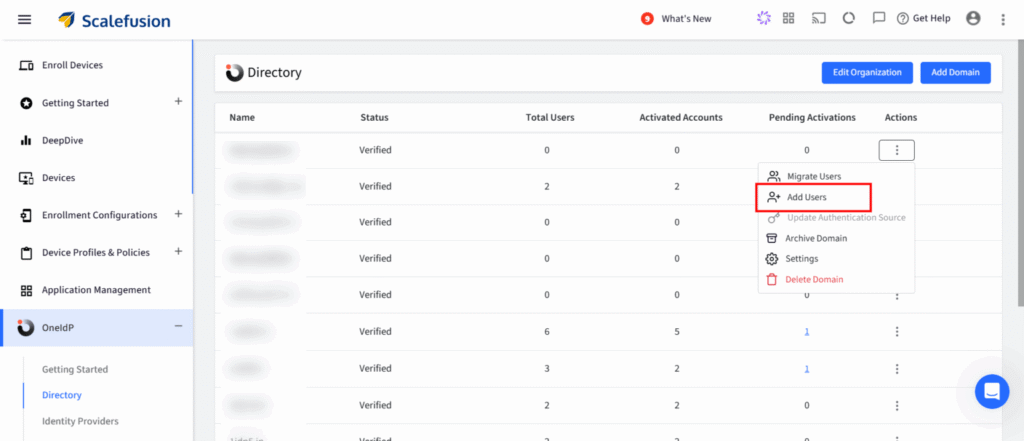
Step 1: Go to the Directory in the Scalefusion dashboard, click the three dots next to your directory, and select Add Users.
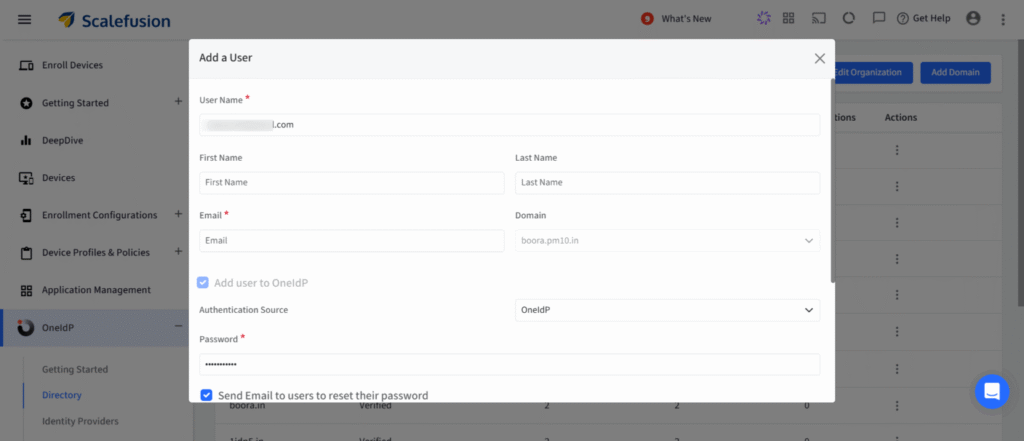
Step 2: Fill in username, name, and email (domain auto-fills). Select Add to OneIdP for custom domains and set the Authentication Source if needed.
Method 2: Add Users via Enrollment
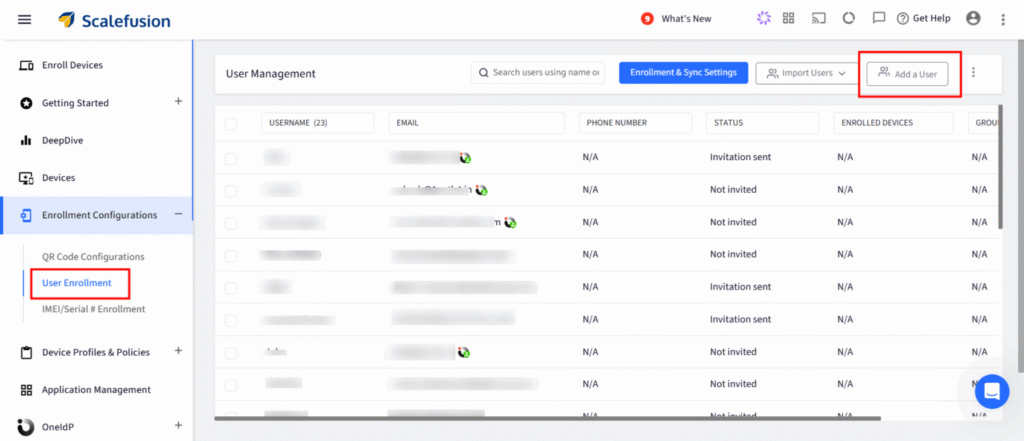
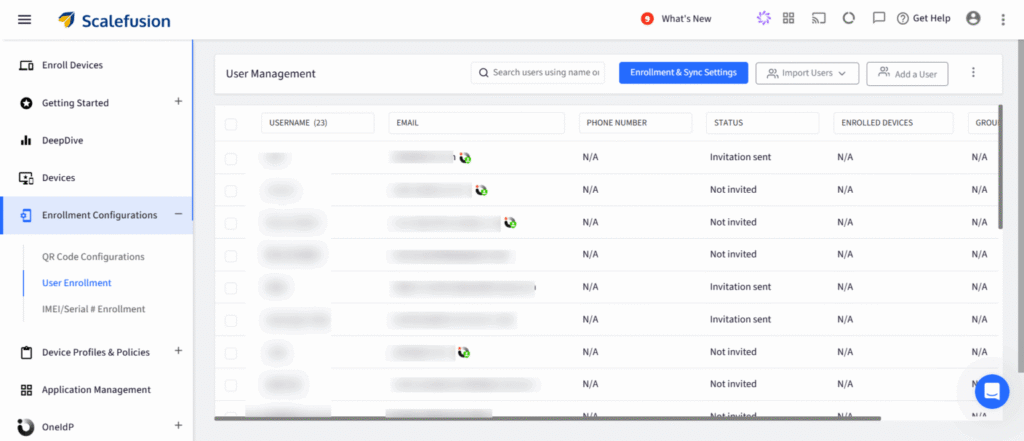
Step 1: Navigate to Enrollment Configurations > User Enrollment.
Step 2: Click Add a User.
Step 2: Enter user details, making sure to select the correct directory domain in the email dropdown.
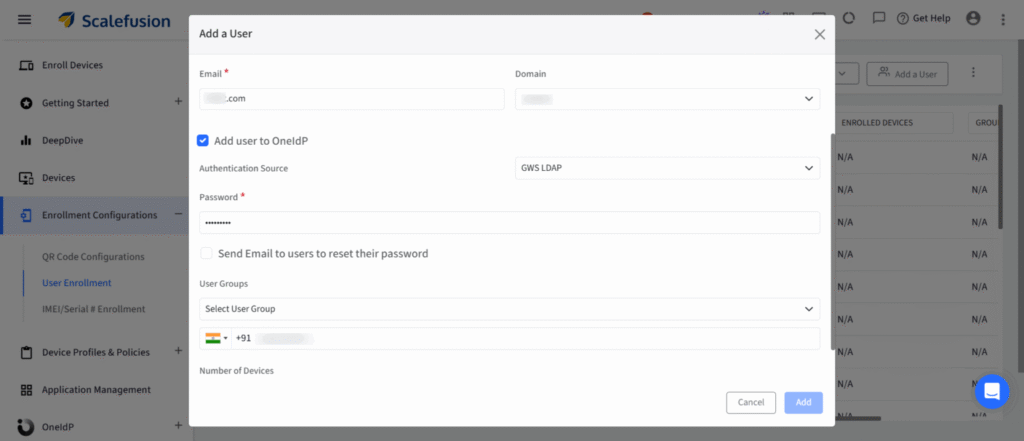
Step 3: Password is optional for custom domain users. Now, click Add. Users will show a OneIdP logo if the default domain is used.
2. Managing Users (OneIdP Actions)
Manage Users
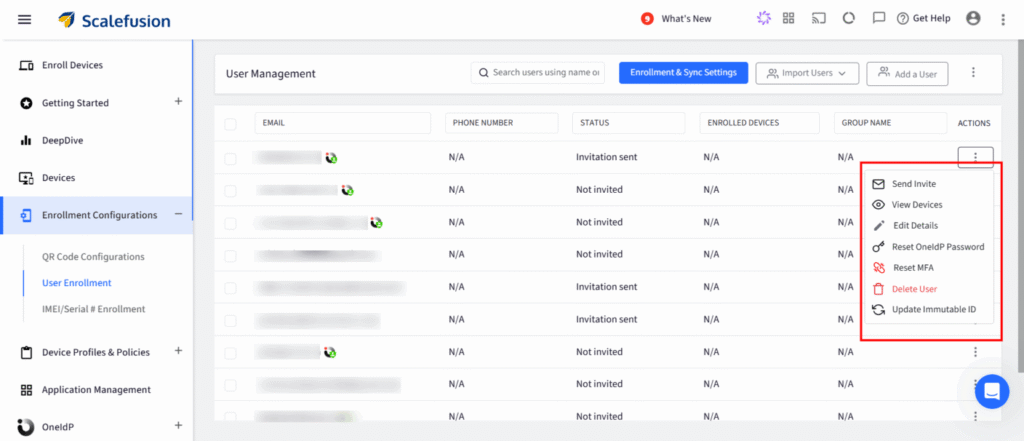
- Delete users as needed.
- View Devices linked to each user.
- Edit Details (excluding email and password).
- Reset Password without logging the user out.
This keeps your Microsoft Entra ID users synced with Scalefusion OneIdP, simplifying management effortlessly.
The power of Scalefusion OneIdP to manage Azure/Entra ID users
Managing Microsoft Entra ID users directly from Scalefusion simplifies identity and access operations without disrupting your existing setup. Any user changes in Entra are automatically updated in Scalefusion, and the other way around.
Admins benefit from centralized visibility, avoiding multi-screen fragmentation and reducing the need for back-and-forth between systems. The interface is intuitive and easy to use, making it simple to assign policies, manage users, and configure access across Windows, Android, macOS, iOS, and Linux devices.
For IT teams managing Entra accounts through OneIdP, this means faster deployments, fewer errors, and consistent access control, with a centralized visibility through and through. Scalefusion enhances what Microsoft Entra offers by making access management seamless, unified, and practical for real-world IT teams.