

You can lock down Android tablets for business use by enabling kiosk mode or applying Android MDM policies that restrict access to apps, settings, websites, and device functions. This helps organizations turn Android tablets into secure, purpose-built devices for retail, education, healthcare, logistics, hospitality, and field operations while preventing misuse, unauthorized changes, and data exposure.
Key takeaways
Locking down Android tablets helps businesses secure devices, reduce misuse, and ensure tablets are used only for defined work tasks.
- What It Means: Locking down Android tablets restricts devices to approved apps, websites, and settings, turning them into purpose-built tools for specific business workflows and use cases.
- Why It Matters: Without restrictions, tablets can lead to distractions, unauthorized access, and data leaks, making lockdown essential for maintaining productivity and protecting sensitive business information.
- Lockdown Methods: Businesses can use single-app mode, multi-app kiosk mode, or browser lockdown to control usage based on specific needs, from dedicated kiosks to multi-function employee devices.
- Role of UEM: A UEM solution enables centralized control, allowing IT teams to remotely enroll devices, apply policies, manage apps, and monitor usage across all tablets from one dashboard.
- Business Outcomes: Android tablet lockdown improves security, reduces IT overhead, ensures compliance, and creates a consistent, distraction-free user experience across large-scale deployments.
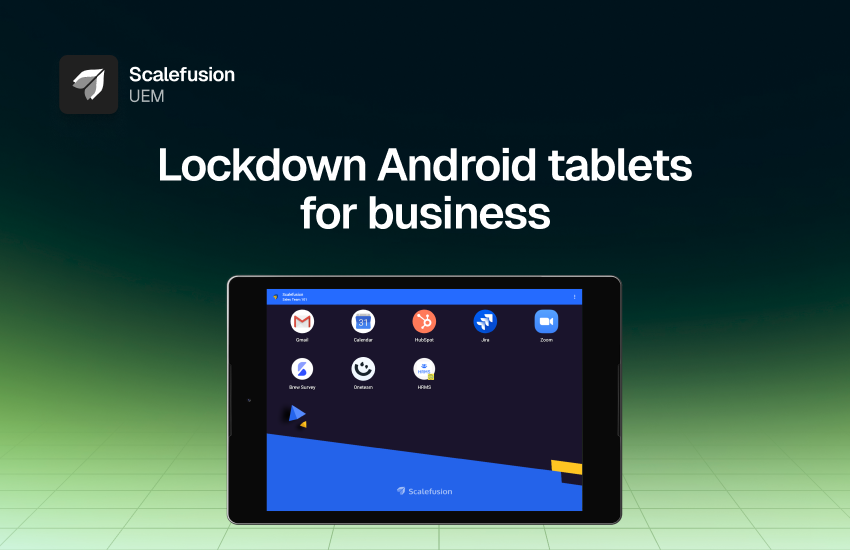
Handing out Android tablets to employees sounds efficient until those same devices start affecting productivity or leaking data.
That is why businesses now lock down Android tablets to run only selected apps and block everything else. It is not about control, it is about purpose. When a tablet is used purely for work, it becomes a tool, not a distraction.
In this guide, we will explain what lockdown on Android means and how you can lockdown Android tablets for business using a UEM solution.
What is Android Lockdown Mode?
Android Lockdown Mode lets you lock down Android tablets or phones so they work only for specific business tasks. With the help of a UEM (Unified Endpoint Management) solution, companies can restrict devices to selected apps, block unnecessary features, and prevent misuse. It is a practical way to turn off-the-shelf Android devices into secure, purpose-driven tools.
Here are some common ways businesses use lockdown on Android:
- Locking a tablet to a single app like a check-in screen or product catalog.
- Allowing access to only a few apps needed for work, and nothing else.
- Blocking system settings, notifications, and status bar to avoid tampering.
- Limiting browsing to approved websites for training or internal tools.
- Preventing users from downloading new apps or changing configurations.
Using Android lockdown mode is a simple yet powerful way to maintain control, boost productivity, and protect sensitive business data.

Why Should Businesses Lock Down Android Tablets?
Giving Android tablets to your team makes sense, they are affordable, flexible, and easy to roll out. But the same device used for work can quickly become a problem if left wide open. Employees can access personal apps, change settings, or even expose sensitive business data unintentionally.
That is why more businesses are choosing to lock down Android tablets. When a device is restricted to specific apps or websites, it stays focused on the job. No distractions, no off-task browsing, no tampering with system settings.
Whether it is for deliveries, retail counters, field teams, or customer-facing kiosks, locking down Android tablets helps ensure each device does exactly what it is meant to and nothing else.
How to Lock Down Android Tablets for Business Use?
The most straightforward answer is using a UEM solution. It remotely monitors, manages, and controls all corporate-owned smartphones and tablets over the cloud by locking them in kiosk mode. Based on your business needs, you can easily bulk enroll Android tablets and then apply either Single App Kiosk Mode, Multi-App Kiosk Mode, or Kiosk Browser Lockdown Mode. Not sure which one to use? Here’s how they differ:
Single App Mode
In single app mode, you can lock an Android tablet to one website or application and auto-launch the same whenever the tablet reboots.
What it does:
- Boots directly into the assigned app every time
- Hides the home, back, and recent app buttons
- Blocks access to notifications, settings, and all other apps
- Automatically reopens the app if it crashes or is closed
Where it fits best:
- Tablets used for queue management in banks or clinics
- Check-in devices at gyms, coworking spaces, or salons
- Self-service kiosks for bus/train ticket bookings
- Digital info points at museums or exhibitions
Multi-App Kiosk Mode
In Multi-App Kiosk Mode users/employees can access multiple selected apps without meddling with the device hardware and software settings.
What it does:
- Shows only the apps you have allowed, nothing more.
- Blocks new app installation or uninstalling existing ones.
- Prevents access to the notification bar and system settings.
- Lets you customize the layout, shortcuts, and branding for easy navigation.
Where it fits best:
- Logistics teams using scanning and inventory apps.
- Medical staff working with records, scheduling, and messaging tools.
- Field agents handling service requests, checklists, and communication.
- Delivery agents switching between maps, order updates, and calls.
Kiosk Browser Lockdown
Kiosk Browser Lockdown is perfect when you want an Android tablet to open only certain websites and nothing more. It turns the device into a locked-down browser that allows access to approved web pages while blocking everything else. No access to settings, no unrelated browsing, and no system distractions.
What it does:
- Opens only the websites or web apps you whitelist.
- Hides browser controls like address bar, bookmarks, and private mode.
- Prevents users from clicking external links or pop-ups.
- Lets admins manage which URLs are accessible in real-time.
Where it fits best:
- Student access to learning portals or training content.
- Visitor terminals for checking property listings in real estate offices.
- Event check-in and registration through web forms.
- Online surveys or feedback kiosks in airports or malls.
Difference between Android Lockdown Mode and Android Kiosk Mode
If you are looking to improve productivity and control how Android devices are used at work, both Lockdown Mode and Android Kiosk Mode offer solid options but they serve different purposes. Here is a side-by-side breakdown to help you decide which fits your business needs better:
| Factor | Android Lockdown Mode | Android Kiosk Mode |
|---|---|---|
| Purpose | Designed to secure individual devices in high-risk or sensitive situations. | Best for turning devices into dedicated tools for specific tasks. |
| User Access Control | Disables certain unlock options like biometrics to limit access. | Restricts users to approved apps and blocks everything else. |
| Scalability | Works well on a case-by-case basis. | Ideal for rolling out consistent settings across a large device fleet. |
| Security | Useful for protecting sensitive data on a personal level. | Prevents misuse by locking the device into a controlled environment. |
| Customization | Limited customization but focused mostly on restriction. | Highly flexible and can customize apps, layout, and experience to match workflows. |
| Management | Typically user-triggered; not centrally managed. | Centrally managed for easier control across multiple devices. |
| Cost | Built into Android, no extra tools required. | May need additional software or a device management solution. |
| Best Use Cases | Securing employee-owned devices or handling sensitive info. | Great for kiosks, customer-facing tablets, or work-only devices. |
For most businesses, Android Kiosk Mode is the better choice. It offers more control, better scalability, and flexibility to shape the device experience around specific tasks, making it ideal for structured, large-scale deployments.
Key Benefits of Using MDM Solution for Lockdown Mode on Android Tablet
Using a UEM solution to implement lockdown mode on Android tablets offers businesses greater control, security, and efficiency. With Android lockdown mode, organizations can restrict devices to specific apps and functionalities, ensuring they are used strictly for their intended business purpose. Scalefusion offers several key benefits, such as:
1. Enhanced Security
UEM solution allows you to secure corporate data by enforcing strict security policies, such as password protection, encryption, and data wipe capabilities in case of theft or loss. This minimizes the risk of data breaches and unauthorized access.
2. Controlled Device Usage
By locking down tablets, businesses can restrict device usage to specific applications and functions. This prevents the misuse of devices for non-work-related activities, thereby increasing productivity and ensuring that the devices are used as intended.
3. Centralized Management
UEM solutions provide a centralized platform for managing all your enterprise tablets. You can remotely manage, configure, and monitor devices, streamlining IT operations and reducing the administrative burden in real-time.
4. Customizable User Experience
Businesses can customize the user interface and experience to suit specific needs. This includes setting up kiosk mode for customer-facing devices or tailoring the interface for employee use in specific roles.
5. Application Management
With UEM solutions, you can install, update, and manage tablet applications remotely. This ensures all devices have the necessary tools for employees to perform their tasks efficiently.
6. Compliance and Reporting
UEM solution helps in maintaining compliance with industry regulations by enforcing appropriate policies and security measures. It also provides detailed reports and analytics for monitoring device usage and compliance status.
7. Reduced IT Costs
Businesses can lower their overall IT costs by efficiently managing tablets and minimizing the risks of security breaches. This includes savings from avoiding data breaches, reducing device downtime, and minimizing the need for extensive IT troubleshooting support.
8. Improved Device Performance
Regular updates and maintenance through the UEM solution can help keep the tablets running smoothly, ensuring they perform optimally for business tasks.
9. Support for BYOD Policies
If your business has a Bring Your Own Device (BYOD) policy, UEM solutions can help securely manage personal devices used for work purposes, keeping corporate data separate and secure.
10. Enhanced Customer Experience
For customer-facing roles, tablets locked down in dedicated device mode can provide a streamlined and user-friendly interface, enhancing the overall customer experience.
Why Lockdown Android Tablets for Business with Scalefusion MDM?
Managing Android tablets at scale is not just about installing apps, it is about making sure devices stay focused, secure, and aligned with business tasks. Scalefusion UEM offers a complete solution to lock down Android tablets, giving businesses full control over how devices are used, whether in the hands of employees, customers, or field teams.
Here is why businesses rely on Scalefusion UEM to manage and lock down their Android tablets with ease:
1. Unified Dashboard for Device Management
Scalefusion gives IT teams a single, intuitive dashboard to manage every enrolled device. Whether you are pushing apps, applying restrictions, or checking device status, everything can be done remotely making it easier than ever to lock down Android tablets for business.
2. Advanced Lockdown Modes
Scalefusion supports multiple ways to lockdown Android tablets, including Single App Kiosk Mode, Multi-App Kiosk Mode, and Kiosk Browser Lockdown Mode. You can run just one app, allow only a set of tools, or give access to specific websites and nothing more.
3. Remote Cast, Control & Troubleshooting
With Remote Cast & Control, IT teams can view and interact with the tablet screen in real-time. It is a powerful way to support users and ensure Android lockdown mode works exactly as intended even when devices are deployed remotely.
4. Powerful Security Configurations
Scalefusion helps enforce strict security policies on every device. From disabling system settings to blocking factory resets and unauthorized access, it ensures your locked down Android tablets stay secure and tamper-proof.
5. Seamless App & Content Management
Need to deploy business apps or documents? With Scalefusion, you can silently install, update, or remove content across all tablets. It is ideal for keeping Android tablet lockdown environments up-to-date without disrupting work.
6. Custom Branding & Home Screen Layout
With Scalefusion UEM, you can create a branded profile, distraction-free device experience by customizing the tablet’s layout, icons, and wallpaper. Perfect for customer-facing setups or focused work environments where locking down Android tablets also means creating a clean, intuitive interface.
Effortlessly Lockdown Android Tablets with Scalefusion MDM
Locking down Android tablets for business brings key benefits such as stronger security, better control, and a more focused user experience. No matter the industry, it helps businesses manage how devices are used, protect sensitive data, and boost overall productivity.
With Scalefusion UEM, you can easily lock down Android tablets for business use, turning them into dedicated tools for specific tasks. It allows companies to secure their devices, simplify management, and create a customized experience for both employees and customers.

FAQs
1. What is Android lockdown mode and how is it used in businesses?
Android lockdown mode is a feature that allows businesses to restrict devices to specific apps, settings, and functionalities, ensuring they are used only for their intended purpose. With Android lockdown mode, organizations can prevent misuse, enhance security, and streamline operations, making it ideal for use cases like kiosks, field services, retail, and corporate device management.
2. Do Android tablets have Kiosk Mode?
Yes, most modern Android tablets support Kiosk Mode, either natively or through third-party solutions. For more advanced control and customization, businesses often use a UEM or MDM solution to enable and manage Kiosk Mode across multiple devices.
3. How do you lock an Android tablet on one website?
To lock an Android tablet to just one website, you need to enable Kiosk Browser Mode through a UEM or MDM platform. This mode allows you to whitelist a single URL and block all other web access. It removes browser controls, disables navigation, and prevents users from opening new tabs or entering different sites.
4. How to turn off lockdown mode on Android?
To turn off lockdown mode on Android, you typically need admin-level access. If the device is managed through an UEM or MDM, the lockdown can be removed remotely by disabling the kiosk profile from the dashboard. On unmanaged devices, exit options may include a password, gesture, or pin set during setup.

